With E20 fuel becoming the new standard in India, many riders are concerned about how it affects motorcycles that remain parked for extended periods. While E20 is safe for regular use, leaving it in the fuel tank for weeks or months without riding can lead to fuel degradation and, eventually, corrosion inside the tank.
Why Does E20 Fuel Cause Fuel Tank Corrosion?
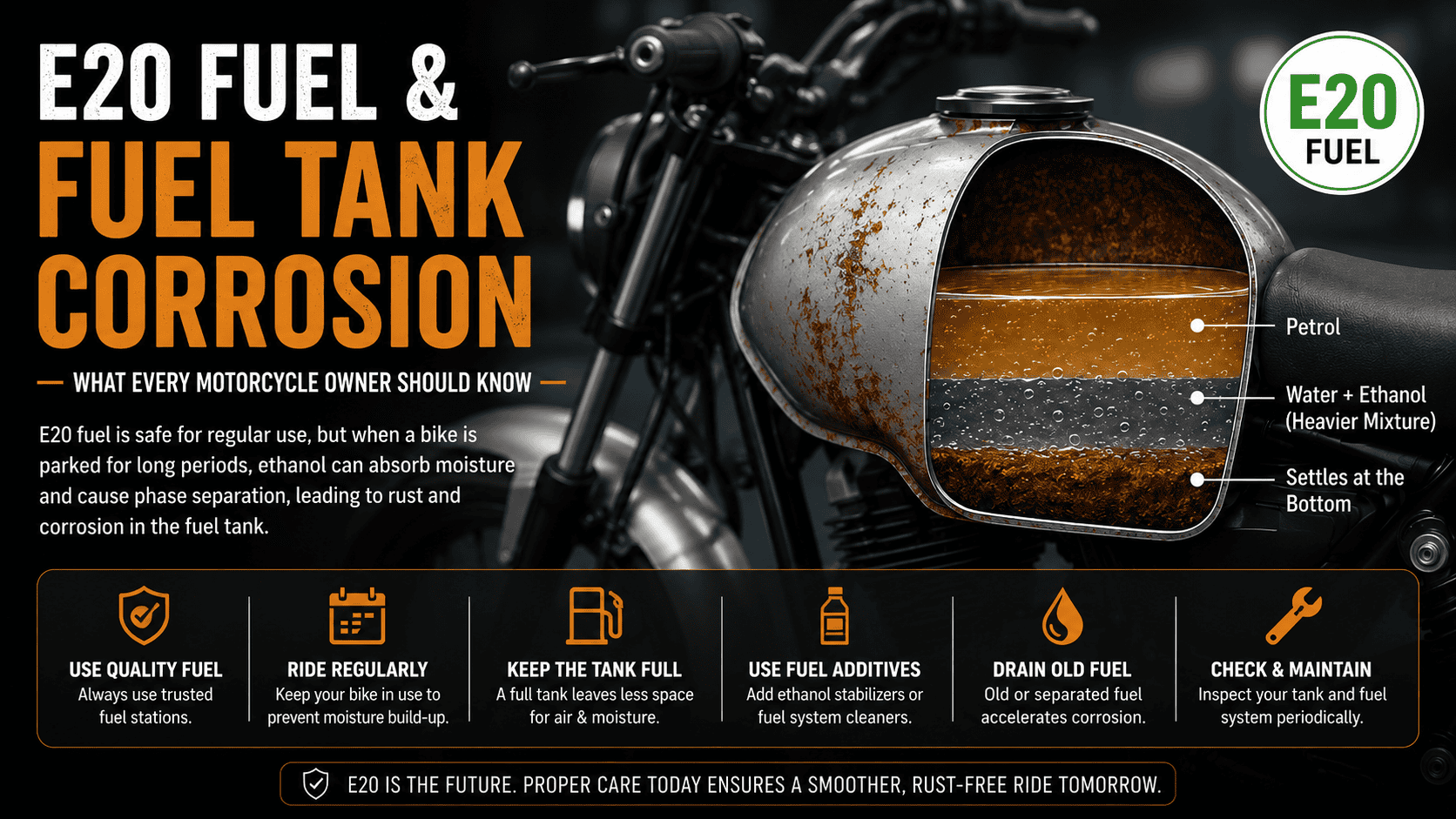
The main reason is ethanol, which makes up 20% of E20 fuel. Ethanol is hygroscopic, meaning it naturally attracts and absorbs moisture from the surrounding air.
When a motorcycle is parked for a long time, daily temperature changes cause the fuel tank to expand and contract, allowing humid air to enter and exit the tank. Over time, the ethanol absorbs this moisture.
Once the absorbed water reaches approximately 0.5% by volume, the ethanol can no longer remain mixed with the petrol. This results in phase separation, where the ethanol and water combine into a heavier mixture that settles at the bottom of the fuel tank.
Since this water-rich layer stays in constant contact with the metal surface of the tank, it promotes rust formation and internal corrosion. If the engine is started, it may also draw this water-ethanol mixture into the fuel system, causing poor performance.
How Long Can E20 Fuel Stay in a Parked Motorcycle?
E20 fuel can generally remain in a parked motorcycle for up to 3–4 weeks without significant issues.
If the motorcycle remains unused for more than one month, the ethanol begins absorbing more atmospheric moisture. This increases the chances of phase separation, fuel degradation, and corrosion inside the fuel tank.
If you know your motorcycle will remain parked for several weeks, it’s advisable to take preventive measures before storage.
Early Signs of E20 Fuel Degradation
If E20 fuel has started deteriorating, your motorcycle may show the following symptoms:
- Difficulty starting the engine
- Engine jerking during acceleration
- Rough or erratic idling
- Poor throttle response
These problems occur because the fuel pump or carburetor begins drawing the water-ethanol mixture from the bottom of the tank instead of clean petrol.
Can a Fuel Stabilizer Prevent Phase Separation?
Yes. A high-quality ethanol fuel stabilizer can significantly delay the effects of fuel degradation Like – Motorex Ethanol Treatment – 250ml
These additives are specially formulated to stabilize ethanol-blended fuels and can help prevent phase separation for up to six months, making them ideal for motorcycles that are stored seasonally or ridden infrequently.
However, it’s important to note that fuel stabilizers are preventive—not corrective. Once the fuel has already separated into layers, no additive can restore it to its original condition. In such cases, the old fuel should be drained and replaced with fresh fuel.
Final Thoughts
E20 fuel is suitable for everyday riding, but motorcycles left parked for extended periods require extra care. Moisture absorption, phase separation, and internal tank corrosion can all occur if fuel sits unused for too long.
If your bike will be parked for more than a few weeks, using a quality ethanol fuel stabilizer before storage is one of the easiest ways to protect your fuel system, maintain engine performance, and reduce the risk of expensive repairs.